Shoulder Injuries in Hockey: Why Prevention Starts Off the Ice
A Hidden Weak Spot in a Tough Sport
Hockey is a collision sport built on power, speed, and precision. While players often focus on knee or hip injuries, shoulder damage is one of the most common reasons for time away from the rink, especially in contact leagues.
In North Vancouver, where hockey culture thrives year-round, shoulder injuries can affect athletes at every level, from youth to recreational adults. Whether it’s a body check gone wrong, an awkward fall, or repetitive shooting strain, proper prevention and strengthening strategies are critical to long-term performance.
Common Shoulder Injuries in Hockey
Hockey players face several shoulder-related issues, often falling into two main categories: acute trauma and overuse injuries.
1. Shoulder Dislocations and Subluxations
Direct contact with the boards or another player can cause the upper arm bone (humerus) to slip partially or fully out of the shoulder socket. While the least common injury on this list, it is also one of the most significant.
2. AC (Acromioclavicular) Joint Sprains
A fall onto the shoulder or an impact from another player can injure the small joint at the top of the shoulder. AC joint sprains cause pain immediately at the AC joint and when crossing the arm across the body.
3. Rotator Cuff Strains and Impingement
Repetitive shooting, passing, and checking can overload the four small muscles that stabilize the shoulder joint. These four muscle comprise the rotator cuff.
4. Labral Tears
The labrum is a ring of cartilage that deepens the shoulder socket. Traumatic dislocations or repetitive motion can cause tears, leading to clicking, instability, or pain during slap shots.
Why the Shoulder Is So Vulnerable
The shoulder is the most mobile joint in the human body, allowing hockey players to handle pucks, pass, and shoot in all planes of motion. However, that same mobility sacrifices stability.
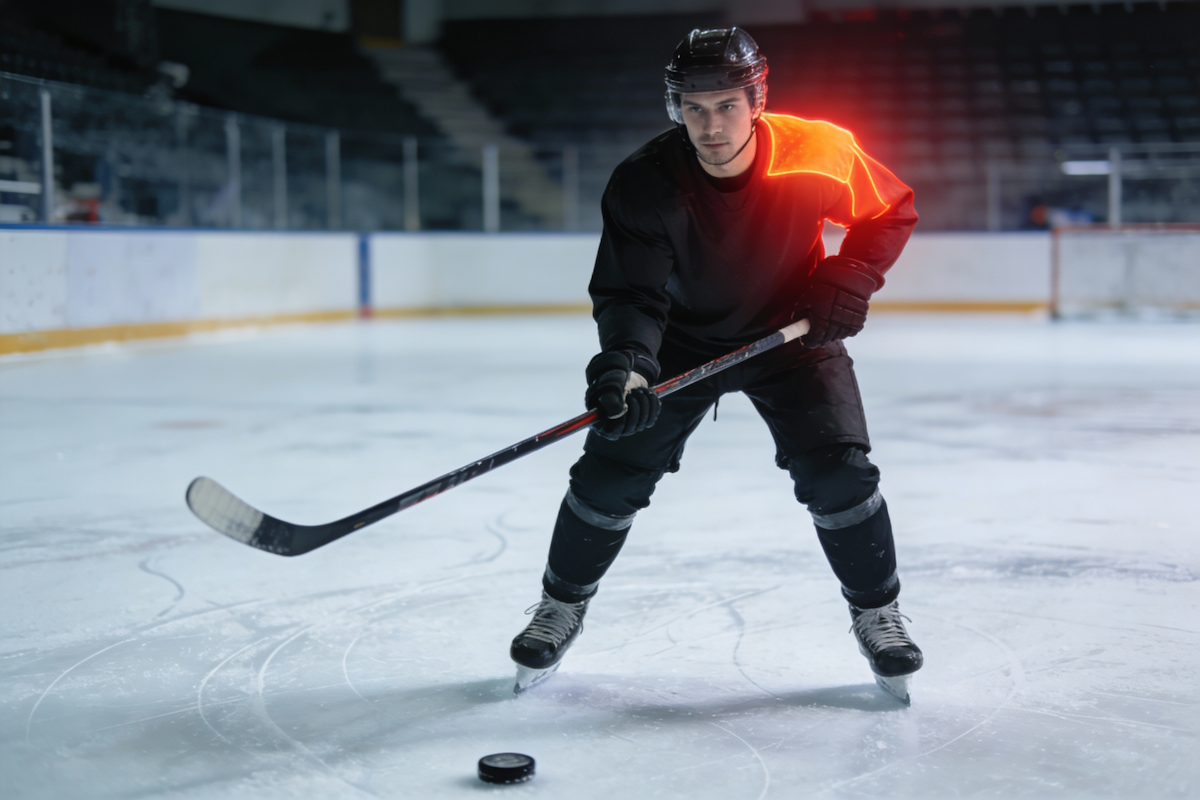
On the ice, players face repeated exposure to:
Sudden high-velocity contact (checks, collisions)
Falls onto outstretched hands
Asymmetrical loading (favoring one side during shots or passes)
Overhead strain from stick handling and follow-through
These combined forces stress the stabilizing muscles and connective tissues. If players lack balanced strength or control, the shoulder joint can’t adequately protect itself during play.
Off-Ice Conditioning: The Best Defense
Preventing shoulder injuries starts in the gym, not the rink. Evidence supports off-ice strength and mobility training as one of the most effective strategies for reducing hockey-related shoulder injuries.
Key elements of an effective shoulder-prep routine include:
1. Scapular Stability
The shoulder blade acts as a base for all upper-body motion. Exercises like:
Scapular push-ups
Wall slides
Serratus punches
Prone “Y” and “T” raises
help maintain proper shoulder mechanics during contact and shooting.
2. Rotator Cuff Endurance
Light resistance-band work (internal/external rotations) improves dynamic stability.
Three sets of 15–20 reps, 2–3 times per week, are enough to maintain protective strength through the season.
3. Posterior Chain and Core Strength
A strong back and core protect the shoulders from absorbing unnecessary load. Movements like deadlifts, rows, and planks promote balance between anterior (front) and posterior (back) musculature—key for injury prevention.
The Role of Mobility and Posture
Many hockey players develop tight pectorals and anterior shoulders from skating posture and repetitive stick-handling. This pulls the shoulder joint forward, increasing the risk of impingement and overuse.
Regular mobility work can reverse these effects:
Doorway pec stretches (30–60 seconds each side)
Thoracic spine extensions on a foam roller
Band pull-aparts and reverse flys
Maintaining thoracic (mid-back) extension helps ensure optimal shooting mechanics and reduces shoulder strain.
Recovery and Load Management
Even well-conditioned players can accumulate fatigue which can increase soft-tissue injury risk.
For hockey players, especially during tournament seasons or back-to-back games:
Prioritize sleep and hydration.
Avoid heavy upper-body lifts immediately before games.
Schedule active recovery days (light skating, stretching, or mobility).
Smart load management protects both the shoulder and the athlete’s longevity.
Class 4 Laser and Shockwave Therapy: Tools for Recovery
When shoulder pain lingers, certain evidence-based modalities can help accelerate tissue healing:
Class 4 Laser Therapy
High-intensity laser therapy stimulates mitochondrial activity, increasing local blood flow and reducing inflammation.
Shockwave Therapy
Shockwave delivers acoustic energy to break up scar tissue and stimulate healing in chronic tendon injuries.
Both modalities are most effective when integrated into a full rehabilitation plan including mobility, strength, and load progression.
Youth and Recreational Players: Special Considerations
Younger players and adults in recreational leagues often face different risk profiles.
Youth players are more likely to suffer growth-plate irritation or labral injuries due to immature musculoskeletal structures.
Adult recreational players face stiffness, poor posture, and muscular imbalances from sedentary jobs, making them vulnerable to strain.
Off-season strength and conditioning programs tailored to age and fitness level are the best form of prevention.
Returning to the Ice Safely
After a shoulder injury, premature return increases the chance of re-injury. A structured return-to-play progression—monitored by a qualified clinician—should include:
Pain-free full range of motion
Symmetrical strength between shoulders
Sport-specific drills (stick handling, shooting, checking)
Gradual reintegration to full contact
Rushing back too soon can undo months of progress.
Key Takeaways
Shoulder injuries are one of the top causes of missed games in hockey.
Prevention starts with off-ice strength, stability, and mobility training.
Balanced shoulder and scapular mechanics protect players from contact and overuse.
Class 4 laser and shockwave therapy can support recovery in persistent cases.
Smart load management and individualized conditioning keep athletes healthy, strong, and ready for the season.